Machu Picchu gets all the attention, and Cusco gets treated as the layover on the way to it — usually one rushed night before an early train. That’s the version of this trip most likely to leave you sick, tired, and unable to actually enjoy the ruins you flew across the world to see.
Why the altitude actually matters
Cusco sits at 3,400 meters. Machu Picchu itself, at around 2,430 meters, is technically lower — but you have to pass through Cusco to get there, and most itineraries fly straight in from sea-level Lima. Altitude sickness at 3,400 meters is common enough that it’s not a matter of if you’ll feel it, but how badly, and three days of gradual acclimatization in Cusco before you head toward Machu Picchu makes a measurable difference.
Day 1: do almost nothing
This is the day people skip, and it’s the one that matters most. Land, get to your hotel, drink coca tea if it’s offered, and resist the urge to go sightseeing. Altitude symptoms tend to hit hardest in the first 24 hours — a slow first day isn’t wasted time, it’s the thing that makes days two and three possible.
Where to stay — via Trivago: we compared Cusco hotels at different elevations within the city itself — a small but real difference exists between properties in the lower San Blas neighborhood versus higher up toward the hills, worth checking if altitude sickness is a concern.
Day 2: gentle walking, the Sacred Valley
By day two, most people feel noticeably better, and this is a good day for a lower-altitude excursion — the Sacred Valley towns of Pisac and Ollantaytambo sit at a lower elevation than Cusco itself, which makes it a smart acclimatization stop rather than a step up.
Book this — via Viator: a full-day Sacred Valley tour covering Pisac’s market and ruins plus Ollantaytambo’s terraces, timed as a lower-altitude day between arrival and the trek.
Day 3: Cusco itself
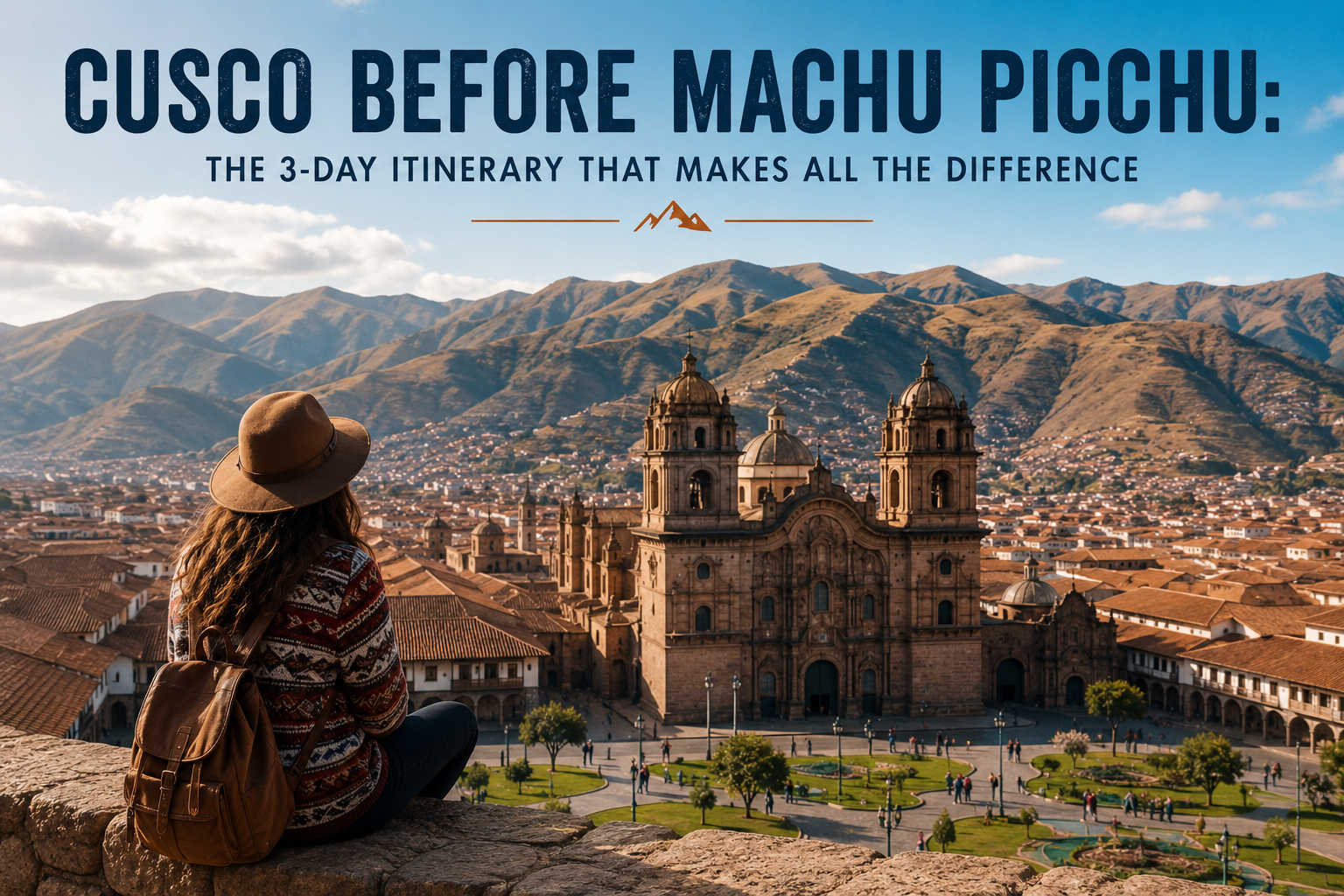
By now you should be feeling close to normal, and this is the day to actually explore Cusco — the Plaza de Armas, San Pedro Market, and the Qorikancha temple foundations beneath the colonial church built on top of them. It’s also, not coincidentally, the day most people report enjoying Cusco most, once the altitude headache has faded.
Then, and only then, Machu Picchu
Whether you’re trekking in or taking the train, day four onward is when you head toward Machu Picchu itself — and doing it after three days of acclimatization rather than one changes the experience from “surviving the altitude” to actually being present for what you came to see.
Plan the route — via Expedia: if you’re combining Cusco with Lima and other Peru stops, building the whole route as one itinerary makes it easier to pace the acclimatization days correctly rather than optimizing purely for flight cost.
Everyone budgets time for Machu Picchu. Almost nobody budgets time for Cusco. Three days fixes that — and it’s the difference between a headache-filled blur and actually remembering the trip.