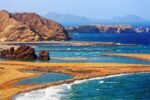
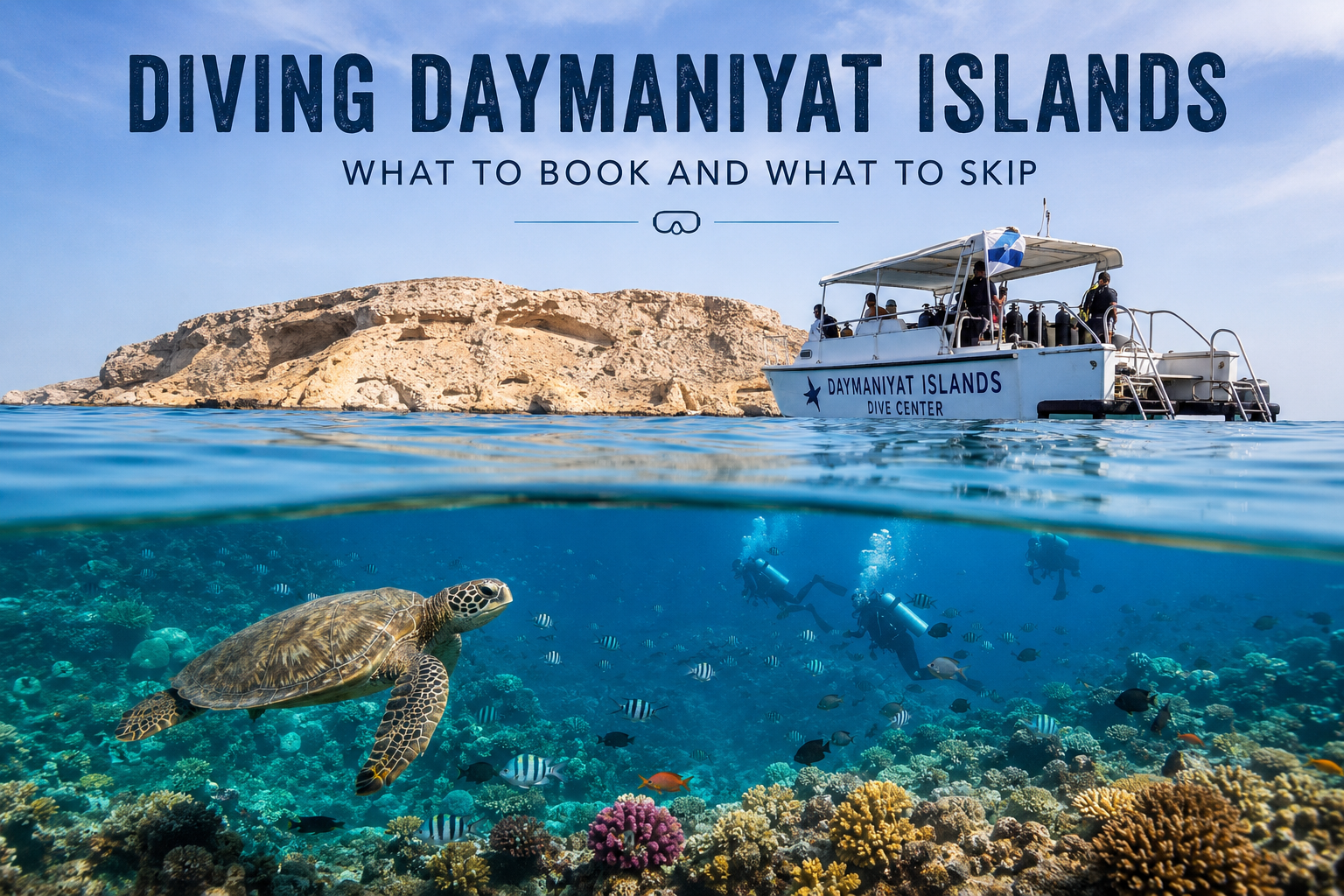
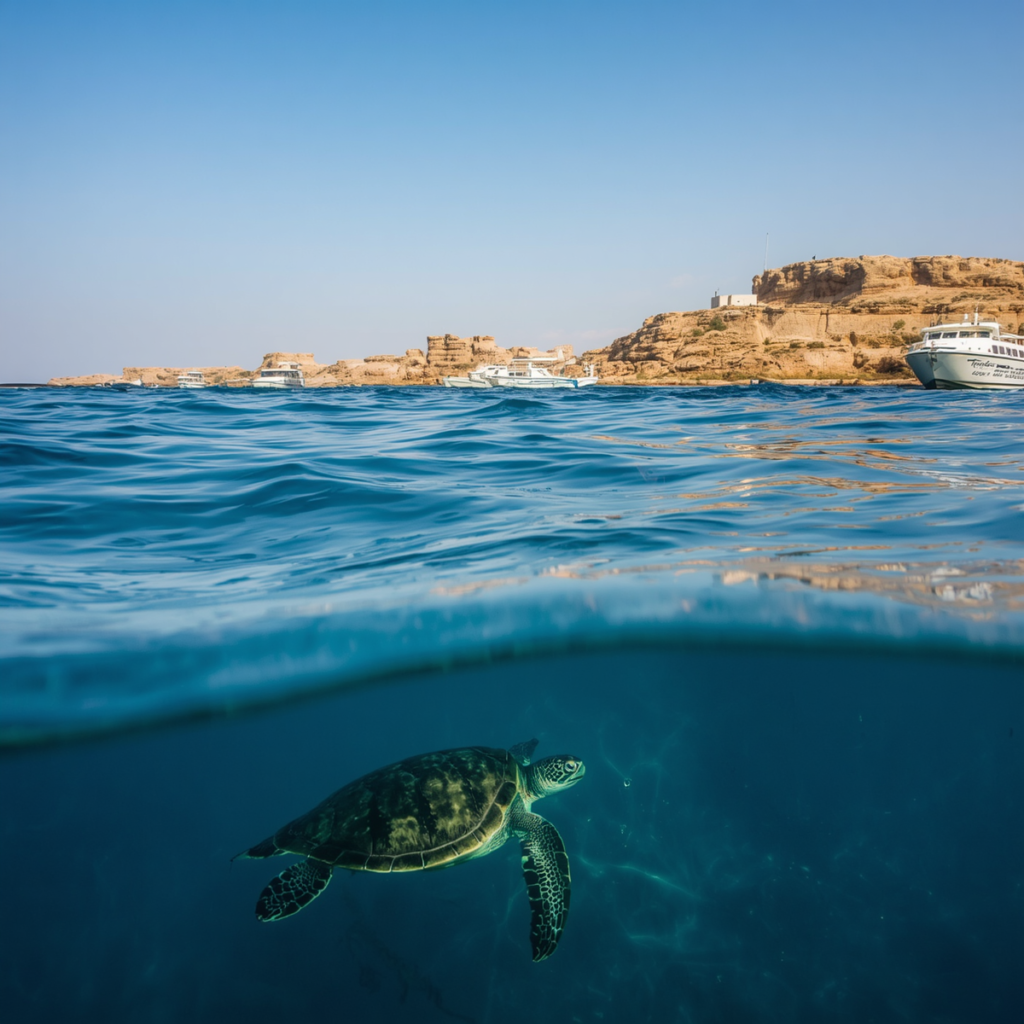
Forty-five minutes off the coast from Muscat, the Daymaniyat Islands sit inside a protected marine reserve that most visitors never hear about, mostly because it isn’t marketed the way Egypt’s reef sites are. That’s largely the appeal — we dove three sites in a single day and saw two other boats, total.
Getting out there
Every operator leaves from the same stretch of coast west of Muscat, around a 45-minute drive from the city center. Boats run seasonally — the reserve closes during turtle nesting season, roughly June through August, so this isn’t a khareef-season trip. Aim for October through April instead.
Book this — via Viator: a full-day two-tank dive trip out to the Daymaniyat reserve, gear rental included, small-group boats capped around ten divers.
What to skip
Skip the operators offering a third or fourth dive crammed into the same day — the marine reserve’s best sites are shallow and slow-paced by design, and rushing between four dives means less time actually looking at anything. Two well-run dives beat four hurried ones.
Also skip booking a snorkel-only add-on if you’re already diving — the visibility and marine life difference between the two is significant enough that snorkeling the same site afterward feels like a downgrade rather than a bonus.
What’s actually down there
Reef sharks, if you’re lucky and there early. Turtles reliably. Some of the healthiest hard coral in the Gulf region, which isn’t a high bar most places but genuinely is here — Daymaniyat’s protected status has kept it in noticeably better shape than open-access sites along the same coastline.
Where to stay the night before
Most dive boats leave early, which makes staying near the departure point worth it over commuting from central Muscat at 6am.
Where to stay — via Trivago: a handful of smaller coastal properties sit closer to the dive departure points than Muscat’s main hotel strip — worth the shorter drive on an early morning.
If you’re not certified
A few operators run introductory dives for non-certified divers, capped at shallower depths, but honestly — the reserve rewards actual diving more than most sites, and if you’re already planning an Oman trip it might be worth getting open-water certified before you land rather than doing a one-off intro dive here.
Most people build an Oman itinerary around mountains and wadis and never look at the water. The Daymaniyat Islands are the reason that’s a mistake — a full marine reserve, forty-five minutes from the capital, that most of Muscat’s own visitors never see.